


Choosing an email security provider in Fullerton is about reliability, not novelty. Most organizations want email that runs without disruption, threats that get stopped early, and someone accountable when controls fail. We’ve worked alongside MSSPs brought in after phishing incidents, near-miss wire fraud, and audits that exposed gaps no one wanted to see.
Those situations remove marketing talk fast. What matters is whether protection holds up under pressure. In our experience, decisions get easier when expectations are set first, based on daily operations, not vendor promises. The difference between “good enough” and resilient security often appears after one bad click. Keep reading to see how to choose wisely.
Key Takeaways
- Strong email security in Fullerton starts with phishing and BEC prevention, not just spam filtering.
- Outsourced email filtering reduces internal workload and improves response speed when incidents occur.
- Local MSSP support matters when compliance, uptime, and fast remediation are on the line.
What Businesses Should Expect From an Email Security Provider
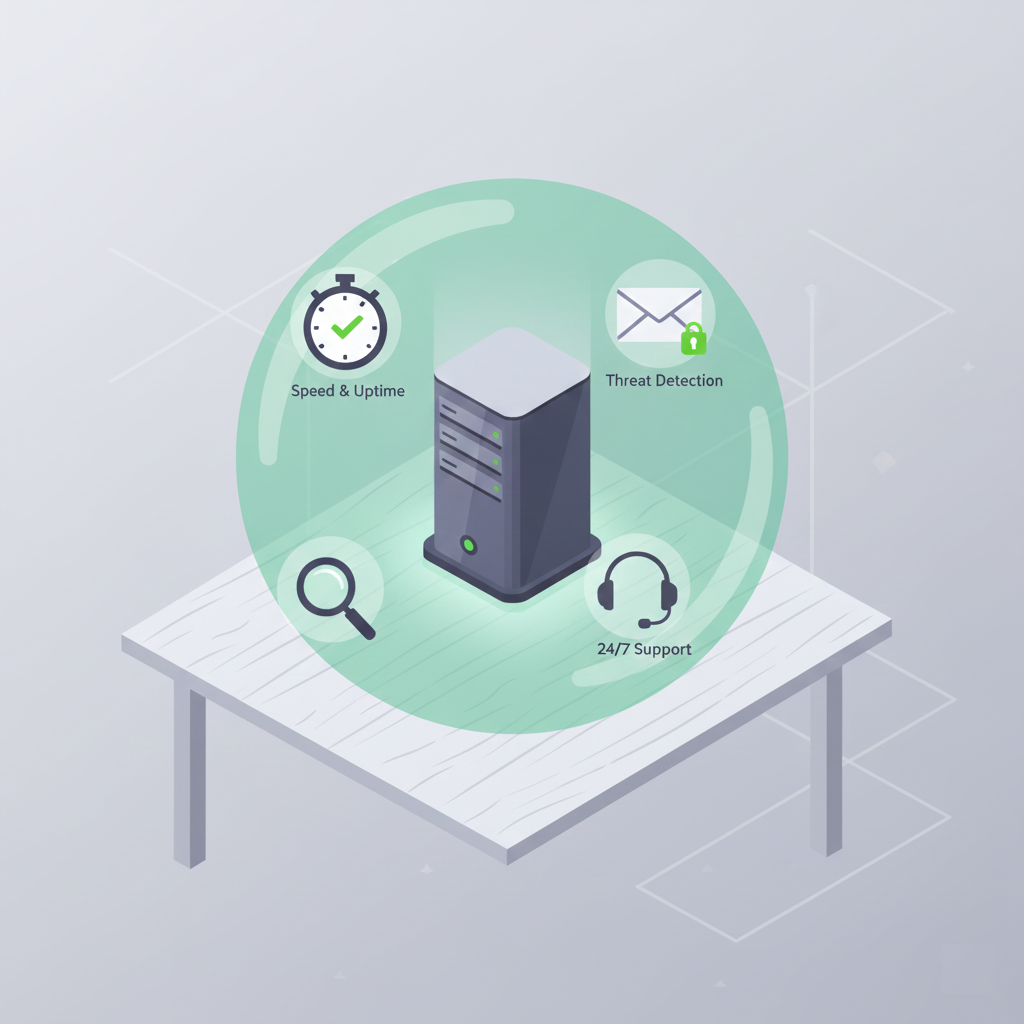
Most Fullerton businesses, especially SMBs, start by comparing brand names. We see this often when we’re brought in to audit stacks: five tools listed on a slide, but nobody can say which threats each one actually blocks.
A better approach is to start with non-negotiables. Before picking a platform or MSSP package, you should be able to say, very clearly, “Any serious provider for our clients must do at least this.”
From what we’ve seen across Orange County, a baseline email security provider should:
- Assume compromise attempts will happen, not treat them as rare events
- Detect threats coming in and going out, not just clean the inbox
- Watch activity all the time, with human eyes reviewing alerts
- Help with policies, not just sell a license and walk away
For MSSPs we advise, we often write these expectations out as a short checklist and use it in every vendor call. It keeps the conversation grounded and prevents getting distracted by shiny add-ons that do not protect against real-world attacks.
Core Threats Providers Must Address
When we audit incident reports from MSSPs, the same patterns show up over and over. The provider that cannot handle these core threats will fail sooner or later, no matter how clever the branding feels.
Table Core Email Threats and Required Provider Capabilities
| Email Threat Type | What the Threat Looks Like in Practice | Minimum Capability a Provider Must Offer |
| Phishing | Fake login pages, urgent messages, security alerts | Behavioral analysis, link inspection, user reporting workflows |
| Business Email Compromise (BEC) | Executive impersonation, vendor payment change requests | Impersonation detection, anomaly detection, wire fraud controls |
| Malware & Attachments | Weaponized documents, hidden links in files | Attachment sandboxing, detonation, anti-malware scanning |
| High-Volume Spam | Floods of low-quality emails hiding real threats | Reputation filtering, rate limiting, continuous tuning |
| Data Loss (Outbound) | Payroll, health data, legal files sent externally | DLP policies, encryption triggers, readable audit logs |
When we run product evaluations for MSSPs, we build test cases around these exact buckets. If a provider cannot show clear controls for each one, they usually do not make the shortlist.
Why Outsourced Email Filtering Matters for SMBs
On paper, some SMBs could manage their own filters. In practice, we rarely see that go well for long.
We often step into MSSP environments where:
- The email security tool was set up years ago and never tuned again
- Alerts are ignored because “they always look the same”
- No one owns email policy, so changes are made only after an incident
Outsourced email filtering, whether through an MSSP or a managed add-on from a provider, solves a big part of this problem and often connects closely with outsourced cybersecurity threat hunting in Fullerton, where suspicious email activity is reviewed in context rather than treated as isolated alerts. It adds:
- Consistent monitoring instead of “check when we have time”
- Regular tuning of rules, block lists, and allow lists
- Real response when a user reports a suspicious email
For the MSSPs we support, managed email filtering is often where they see the biggest drop in client incidents, without hiring extra staff. The tool is the same or similar, but now someone is actually steering the ship.
Key Evaluation Criteria When Choosing a Provider
Once expectations are clear, comparing providers becomes more like a structured audit and less like guesswork.
When we help MSSPs evaluate email security vendors for Fullerton clients, we group criteria into layers:
- Can it prevent the obvious and common threats?
- Can it detect stealthy or new attacks?
- Can it respond fast enough when something gets through?
Every feature we look at should support one of those layers, not just sound impressive in marketing material.
Phishing and Business Email Compromise Protection
When MSSPs ask us where to start, we usually say: “Show us how this provider handles phishing and BEC.” If that part is weak, nothing else really matters.
We look for:
- Behavioral analysis: Can the system spot unusual sending patterns, odd login behavior, or rare attachment types?
- Impersonation defense: Does it flag messages that pretend to be executives, vendors, or internal departments?
- Wire fraud protection: Are there workflows for payment-related emails, such as automatic holds, dual approval, or escalation paths?
- Use of AI and ML: Not in a buzzword way, but in how well the provider explains what their models actually watch for.
In one review we ran, a provider scored high on spam but missed almost every simulated BEC attempt we sent through. On the surface, users saw “less junk.” Under the hood, the most dangerous emails were gliding right by. That’s why we test this layer hard.
Email Authentication and Domain Protection
When we examine email incidents for MSSP clients, domain spoofing and lookalike domains show up often, especially for invoice-heavy businesses.
For real domain protection, an email security provider should:
- Support DMARC from “monitor” to full enforcement, with reporting
- Ensure SPF and DKIM are correctly set and maintained
- Offer clear guidance on brand protection, such as detecting spoofed domains or lookalike variations
Many Fullerton businesses delay DMARC because they worry about blocking good email. We’ve seen MSSPs get stuck here too. Working with a provider that has strong DMARC rollout playbooks, test first, enforce with logging, then tighten, can make this much easier and safer.
Data Loss Prevention for Outbound Email
Outbound controls are where a lot of email security stories go quiet. Until a compliance audit starts asking tough questions.
In our audits, we look for providers that can demonstrate practical controls for reducing data breach risk with DLP, especially when sensitive information leaves the organization through everyday outbound email:
- Scan outbound email for sensitive patterns (SSNs, health data, financial data, etc.)
- Apply policy-based actions (block, encrypt, warn, or require approval)
- Maintain audit logs that are actually readable during an investigation
One MSSP we worked with only realized they had no real outbound control when a legal review asked for evidence of how confidential files were being protected over email. The provider claimed DLP coverage, but no one had set up or tested any rules. We now treat outbound DLP as a core requirement, not a “nice to have.”
Integration With Microsoft 365 and Google Workspace
Most of the MSSPs we consult with run almost everything through Microsoft 365 or Google Workspace. Email security that does not fit smoothly into those platforms tends to cause more pain than value, which is why many MSSPs prioritize architectures built around a managed email security gateway that integrates cleanly without adding fragile routing layers.
When we evaluate products, we look closely at:
- MX record–based filtering vs API-based integration
- How much routing complexity is added (the more hops, the more break points)
- Whether the provider offers clear deployment guides for MSSP use
Both MX filtering and API integration can work well. In our field testing, we’ve found:
- MX-based systems often give strong visibility and control
- API-based systems can be easier to roll out and less likely to break routing
The right choice depends on how each MSSP manages its tenant structure and how much change their client base can handle at once.
Service Reliability, SLAs, and Local Support
During email outages, no one cares what the AI model is called. They care who picks up the phone.
As we help MSSPs review vendors, we pay attention to:
- Uptime guarantees and real outage history
- Response SLAs for both critical and non-critical tickets
- Whether there is local or regional support that understands California businesses
For Fullerton-focused MSSPs, having a partner that can coordinate with local teams, or even with regional compliance experts, can shorten both downtime and audit headaches. We’ve seen deals saved simply because an MSSP could say, “Yes, we know who to call, and they answer.”
Pricing Models and Scalability
Pricing for email security is usually not the main driver, but it shapes what MSSPs can offer at scale.
Most models we see land around:
- A per-user, per-month fee
- Higher tiers for sandboxing, DLP, advanced threat intel, or managed response
- Discounts above certain user counts or with multi-year terms
For MSSPs planning growth, we watch for:
- How easy it is to add new clients, domains, or locations without rebuilding the whole setup
- Whether pricing stays predictable as clients move up from 10 users to 100 or more
- Tools for multi-tenant management so staff do not drown in separate portals
Scalability problems almost always show up as operational pain first: too many consoles, inconsistent rules, or manual steps. We flag that early in our reviews.
Overview of Local Email Security Providers in Fullerton
Fullerton does not have a long list of pure-play email security vendors. Instead, MSSPs wrap email protection into broader managed services, and we’re usually called in to help those MSSPs choose, compare, or re-evaluate the products behind those offers.
Here is how several local providers typically position email security, based on what we’ve seen in the field.
AllSafe IT
AllSafe IT usually comes up in conversations around compliance-heavy environments.
From our observations:
- Email security is tightly linked with endpoint and network controls
- They pay attention to regulatory alignment, especially for healthcare, finance, and professional services
- Structured assessments and reviews are part of their story
For MSSPs looking to partner or benchmark against a compliance-focused model, AllSafe is often on the short list.
XpressGuards
When the main concern is “someone watching our systems all the time,” XpressGuards is often mentioned.
In practice, they lean on:
- 24/7 monitoring and escalation
- Sandboxing for risky attachments and URLs
- Real-time isolation of suspicious messages
We’ve seen this model appeal most to SMBs that do not have any internal security role and want someone else owning the “always-on” responsibility.
CSP Networks
CSP Networks tends to pair email security with resilience themes, keeping the business running even when something goes wrong.
Their approach often includes:
- Managed filtering for inbound and outbound
- Backups and recovery woven into the package
- A push toward overall IT continuity, not just clean inboxes
MSSPs that want to frame email security as part of a broader uptime and recovery story often look at CSP’s packaging for ideas.
Intelecis
When mid-sized clients have more specific risk profiles, we see Intelecis in more conversations.
Based on our reviews, they emphasize:
- Customizable detection rules
- Analytics and reporting that can be tuned for different industries
- Early involvement during risk assessments and pilot tests
For MSSPs serving clients with tighter risk management needs, this type of flexibility can be useful, especially when building out more detailed service catalogs.
BTI Group
BTI Group operates well with larger or fast-growing teams that live in the cloud.
Their model usually centers on:
- Cloud-based email protection that scales with headcount
- Integration with broader managed IT and communications services
- Support for organizations planning steady growth or multi-site expansion
We often see MSSPs benchmarking BTI’s approach when they’re planning to grow beyond small local clients and into larger, more distributed accounts.
Comparing Local MSSPs vs National Email Security Platforms
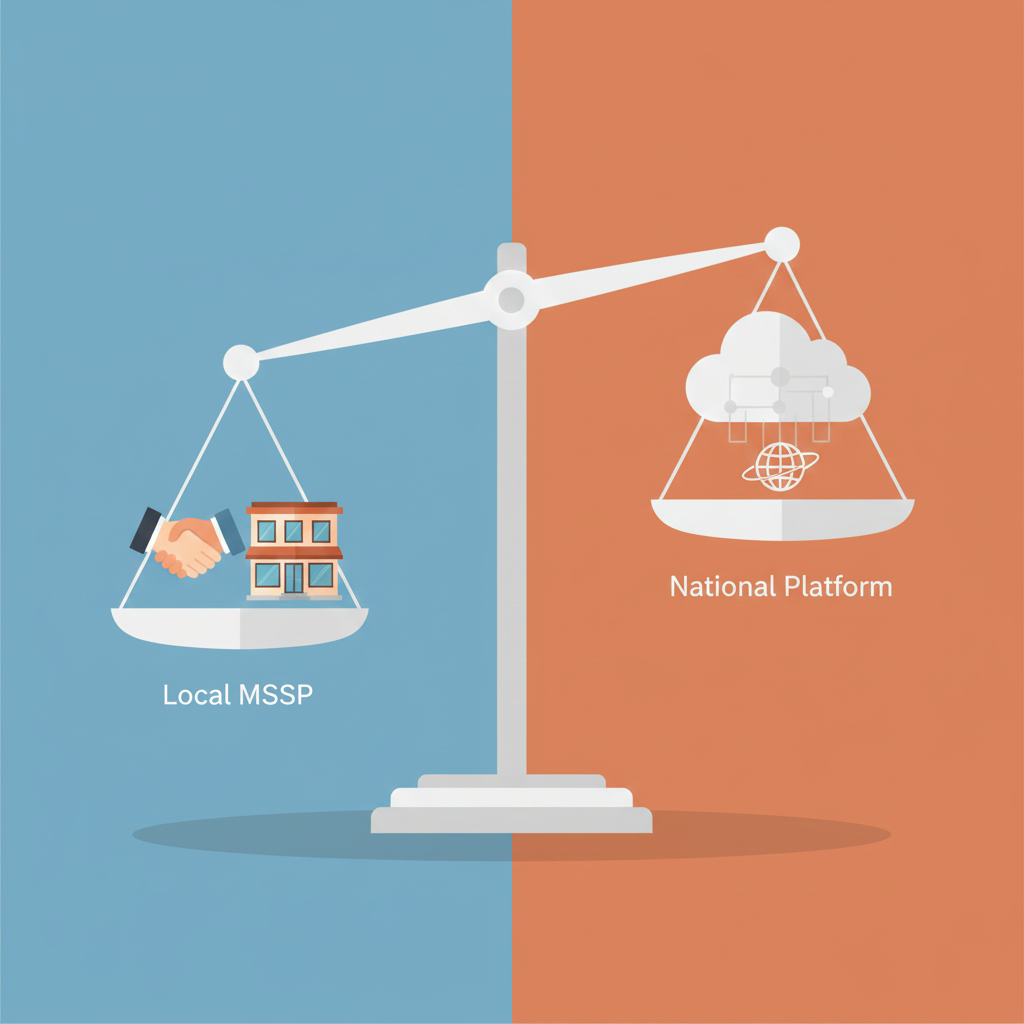
One pattern we see across Fullerton and nearby areas is this: the best results usually do not come from “local only” or “national platform only.” They come from thoughtful combinations.
Many MSSPs we advise run:
- A national or global email security platform for core detection and intelligence
- Local or regional support teams who manage tuning, response, and client communication
The key difference is where accountability lives. Tools detect. People decide what to do next.
Benefits of Working With a Local Fullerton MSSP
Local MSSPs bring something national platforms cannot replicate: context.
From our work with them, the advantages often look like this:
- On-site support when an incident affects physical offices or shared devices
- Awareness of regional regulations and industry patterns in Southern California
- Faster, more personal escalation paths, especially during busy periods or audits
We’ve sat in rooms where an MSSP’s local presence calmed a client during a scary email incident in ways a remote team simply could not match. That trust matters when email is central to operations.
Using National Platforms Through Local Providers
On the other hand, large email security vendors usually offer:
- Stronger threat intelligence, based on data from millions of mailboxes
- Mature feature sets like advanced sandboxing, link rewriting, and API integrations
- Long-term roadmaps and regular updates
When MSSPs combine those national tools with their own local management, we often see the best balance:
- Big-platform detection power
- Local accountability and policy tuning
- Clear ownership when an incident pops up
A lot of our consulting work for MSSPs in Fullerton is exactly this: selecting which big-platform tools to use, then designing how local teams will manage them day to day.
Testing and Validating an Email Security Provider

On calls with MSSPs, we often repeat one line: “If you have not tested it, you do not really know it.”
A proposal or a well-polished demo does not show how a provider behaves with real users, real mail flow, and real bad emails. Testing does.
Running Trials and Measuring False Positives
Research shows that user reporting and testing play a critical role in improving email threat detection accuracy over time. The study highlights that organizations which actively test phishing scenarios and review outcomes are better at reducing both missed attacks and excessive false positives, compared to environments that rely on static filtering alone [1].
When we help MSSPs run trials, we focus on simple, real-world checks:
- Send phishing simulations through the system
- Include attachment-based tests that mimic real malware patterns
- Try impersonation attempts using executive names, domains, and vendors
During the trial, we track:
- How fast the provider detects and removes dangerous messages
- How many legitimate emails are blocked or delayed
- How easy it is for MSSP staff to review and release false positives
Too many false positives burn user trust. Not enough blocking, and the risk rises. We usually recommend MSSPs test long enough to see a normal variety of traffic, not just a single week spike.
Reviewing Compliance and Regulatory Alignment
Rules decide what can be sent, who can see it, and how it must be protected. Email systems need to support encryption, tracking, and clear records from the start. When compliance is built in early, teams avoid rushed fixes, failed audits, and risky workarounds that put sensitive data at risk.
In our reviews, we map email security features against:
- HIPAA, GDPR, and state-level privacy rules
- Requirements for encryption, logging, retention, and user access
- Support for audit trails that can satisfy regulators or legal teams
Data from the U.S. Department of Health & Human Services shows that breaches involving email and insecure communications continue to appear in public reporting, highlighting why encryption, audit logs, and outbound controls must be provable during compliance reviews. [2]. We’ve seen MSSPs avoid major headaches by making sure their chosen provider can back up every claim with actual logs and clear reports.
Ongoing Policy Tuning and Managed Oversight
The last piece we always look for is whether the provider, and the MSSP using it, treat email as a living system, not a “set and forget” project.
Threats shift. Clients change tools. New regulations arrive. Without ongoing tuning, even great email security setups slowly fall behind.
Strong long-term protection usually includes:
- Regular policy reviews (quarterly or at least yearly)
- Adjustments based on new phishing patterns or user behavior
- Clear ownership of who changes what, and how it is documented
We often point to research from the Cybersecurity and Infrastructure Security Agency showing that active monitoring and response significantly reduce breach impact. In our own consulting work, we see the same pattern: MSSPs who treat email policies as living documents have fewer crises and cleaner audits.
FAQ
How should businesses approach Fullerton email security provider selection?
Fullerton email security provider selection should start with real risks, not tool lists. Look at how often phishing happens, how wire fraud could occur, and what compliance rules apply. Choosing email security Fullerton CA works best when teams agree on daily needs first. Many businesses use an email security assessment Fullerton to spot gaps before comparing providers.
When does outsourced email filtering make sense for Fullerton businesses?
Outsourced email filtering Fullerton helps when internal teams cannot watch alerts all day. Managed email protection Fullerton California moves daily monitoring and fixes to specialists. This works well for small business email Fullerton teams that need steady protection without hiring more staff or pulling IT away from core work.
What protections matter most beyond spam filtering in Fullerton?
Spam filtering MSSP Fullerton is only the first step. Businesses also need phishing prevention services Fullerton and BEC defense providers Fullerton. These emails often copy real names, tone, and timing, so they feel safe. The controls catch warning signs early and slow things down before money moves. That pause helps teams double-check requests and avoid costly mistakes.
How important are email authentication and domain controls locally?
Email authentication helps protect trust and your brand in Fullerton. DMARC, along with proper DKIM and SPF setup, stops attackers from sending fake emails that look like they come from your domain. Many local email gateway setups fail because these settings are skipped at the start or never reviewed again. When authentication is not checked often, spoofed emails slip through and damage credibility.
What should companies test before committing to an email provider?
Before signing, request a trial email filtering Fullerton period. Test how fast threats are removed, how false positive tuning works, and whether audit logs email Fullerton are easy to read. Run phishing tests, malware checks, and DLP outbound email Fullerton scenarios to see real performance.
What “Right Fit” Really Means When Choosing Email Security in Fullerton
Choosing an email security provider in Fullerton comes down to trust, transparency, and fit. Tools help, but management decides outcomes. We’ve seen teams gain control after tightening authentication, improving phishing response, and placing oversight with experienced operators.
As MSSP Security, we help MSSPs evaluate tools based on real performance, not promises. Our consulting supports vendor-neutral selection, audits, and stack alignment built on years of field work.
Work with MSSP Security to strengthen your email security strategy
References
- https://academic.oup.com/cybersecurity/article/11/1/tyaf011/8128837
- https://www.hhs.gov/hipaa/for-professionals/security/index.html