


Attackers get in. They move through your network quietly, copying files, mapping where things are. Standard security tools don’t catch them because these intruders work in the spaces where alarms don’t go off.
Threat hunters search differently. They read logs others skip over, notice traffic that looks normal but feels off, push back on what automated systems accept. Real people combined with actual data, that’s the mix.
Hackers change their methods faster than defenses can keep up, so organizations need hunters digging through networks instead of just sitting back waiting for something to trigger.
Keep reading to learn how this actually stops threats while they’re still inside and how proactive threat hunting intelligence works.
Key Takeaway
- Proactive hunting finds threats before damage, reducing attacker dwell time significantly.
- Threat intelligence guides hunting hypotheses, making searches more targeted and effective.
- Combining endpoint, network, and behavioral data uncovers stealthy attacks missed by automated tools.
What is Proactive Threat Hunting Intelligence?

Proactive Threat hunting intelligence works differently than most security approaches. Instead of waiting for alerts to trigger, a human team assumes attackers are already moving through the network and searches for evidence of their presence.
We’ve seen this distinction matter countless times, reactive detection catches incidents after they’ve caused damage, but hunting finds them while they’re still operating.
The actual work combines knowledge of how attackers move (their tactics, techniques, procedures) with threat intelligence and behavioral analysis. Our teams look for indicators of compromise or attack that automated systems let slip by.
These aren’t always obvious patterns. Sometimes it’s a connection that shouldn’t exist, a file accessed at an odd hour, or data moving in a direction it shouldn’t.
From what we observe in MSSP environments, this matters because threats hide. Many attacks remain undetected for weeks or months before anyone notices. We’ve audited products where the dwell time, the period between initial breach and detection, stretched dangerously long.
Proactive hunting cuts that window down. When our clients implement this approach, they catch threats faster, respond better prepared, and reduce the actual damage these intruders cause.
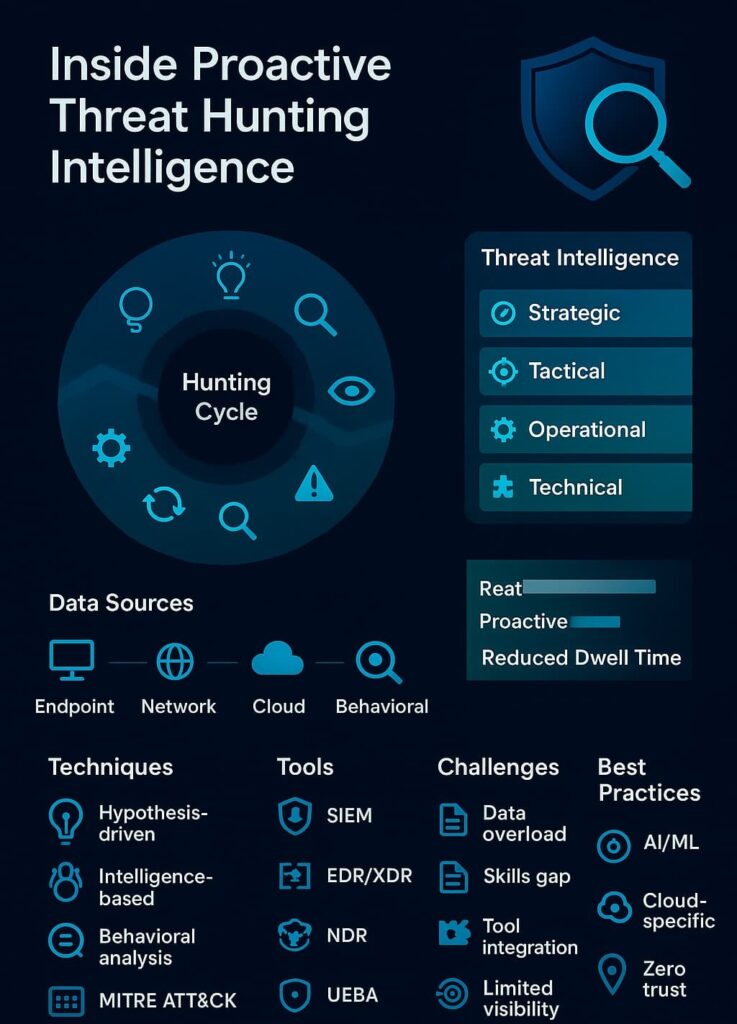
The Role of Threat Intelligence
Credits: SynerComm
Threat intelligence shapes how hunting actually works. Without it, hunters search blind. With it, they know where to look and what patterns matter most, especially when aligning hunts with proactive managed threat hunting strategies that help analysts concentrate on the behaviors that matter most.
Strategic intelligence shows the bigger picture. When we see ransomware targeting healthcare organizations, for instance, our clients know to focus resources there first. That’s not guessing, it’s informed prioritization based on what’s actually happening in their industry right now.
Then there’s tactical intelligence, which gets into the mechanics. Attackers tend to exploit specific vulnerabilities, use particular tools, follow patterns. Intelligence tells us what those patterns look like. If a newly discovered software flaw starts appearing in active attacks, we hunt for signs of it in our clients’ networks before widespread exploitation happens.
Operational intelligence is more immediate. It tracks active campaigns, the domains being used for phishing, the IP addresses launching attacks this week. We feed this into hunts so detection happens while the threat is still fresh.
Technical intelligence provides the specifics. File hashes, command-and-control server addresses, malware signatures. These let us confirm what we’ve found and block it before spread occurs.
We pull internal logs and alerts, then cross-reference them against external intelligence feeds. That combination validates what we discover and helps us adjust our approach. The layers stack together, transforming messy data into directions hunters can actually follow. [1]
How Proactive Threat Hunting Works
The hunt follows a structured, iterative cycle:
- Hypothesis Generation
We start with educated guesses about potential threats based on current intelligence, known adversary behaviors, or unusual activity detected by monitoring tools, the same structured thinking used in many threat hunting services that focus on identifying attacker movement before it escalates. - Data Collection
Next, we gather relevant data from endpoints, network traffic, authentication logs, and cloud telemetry, assembling the pieces needed to investigate. - Data Analysis
Using behavioral analytics and anomaly detection, we sift through the data to identify suspicious patterns or deviations from normal activity. - Threat Detection and Validation
Any anomalies warrant further examination. We confirm whether they represent malicious activity or benign anomalies. - Response and Mitigation
Confirmed threats are contained and remediated promptly to minimize impact. - Feedback and Enrichment
Insights from each hunt feed back into detection rules and intelligence databases, improving future hunting effectiveness.
Techniques and Methodologies
We employ several complementary approaches during hunts:
- Hypothesis-Driven Hunting targets specific attacker tactics or vulnerabilities based on intelligence or emerging threats.
- Intelligence-Based Hunting uses known IOCs and IOAs to track adversary infrastructure or campaigns.
- Behavioral Analysis spots anomalies in user or system behavior that indicate compromise.
- MITRE ATT&CK Framework mapping helps us align hunting activities with known adversary TTPs, ensuring comprehensive coverage.
- Anomaly Detection identifies deviations from established baselines, catching stealthy or novel attacks.
Data Sources for Proactive Threat Hunting
Effective hunting requires rich, diverse data:
- Endpoint Data from EDR systems provides insights into process activity, file changes, and registry modifications.
- Network Data includes traffic logs and intrusion detection alerts to identify suspicious communications.
- Cloud Data offers audit trails and activity logs from dynamic environments.
- Authentication Data tracks login attempts, privilege escalations, and access patterns.
By fusing these data sources, we build a comprehensive picture of activity, enabling detection of subtle threat behaviors.
Tools for Proactive Threat Hunting
The right technology stack amplifies our hunting capabilities:
- SIEM platforms centralize logs and enable correlation across systems.
- EDR/XDR tools monitor endpoints and extend visibility across networks and clouds.
- NDR solutions analyze network traffic for malicious patterns.
- UEBA systems detect abnormal user and entity behaviors.
- Threat Intelligence Platforms (TIPs) aggregate and contextualize external threat data.
In our MSSP Security practice, we integrate these tools seamlessly, orchestrating data flows and automating routine tasks so analysts can focus on high-impact investigations.
Challenges and Considerations
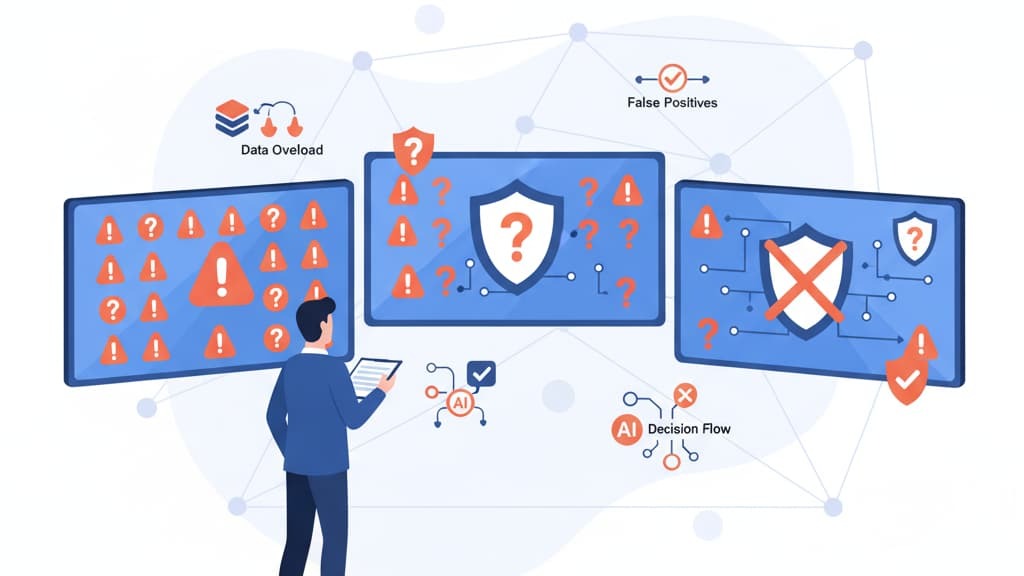
Proactive threat hunting is not without hurdles:
- Incorrect or Missing Hypotheses can lead to wasted time or missed threats.
- Data Overload poses difficulties in filtering noise and prioritizing actionable insights.
- Skills Gap remains a challenge; experienced hunters are in high demand, and organizations increasingly rely on the managed threat hunting approach to reinforce internal capabilities and maintain consistent coverage.
- Tool Integration is critical to avoid siloed data and ensure smooth workflows.
- Visibility Limitations require continuous improvement in telemetry coverage.
We address these by emphasizing training, collaboration, and leveraging MSSP Security’s expertise to augment internal teams.
Best Practices
Based on our hands-on experience, we recommend:
- Define Clear Objectives aligned with business risks and compliance requirements.
- Automate Routine Tasks to speed data collection and reduce analyst fatigue.
- Document Everything to maintain institutional knowledge and support continuous improvement.
- Foster Collaboration across security functions to share insights and coordinate defenses.
- Continuously Improve by incorporating feedback from hunting outcomes into detection logic and intelligence. [2]
The Future of Proactive Threat Hunting Intelligence
The landscape is evolving rapidly:
- AI and Machine Learning are transforming analysis and detection, enabling faster, more accurate hunts.
- Cloud Security demands specialized techniques to manage dynamic, ephemeral environments.
- Zero Trust Architectures integrate threat hunting deeply into broader security postures.
- Threat Intelligence Sharing enhances collective defense by pooling knowledge across organizations.
At MSSP Security, we embrace these trends to keep our threat hunting program adaptive and forward-looking.
FAQ
1. What makes proactive threat hunting different from traditional cybersecurity monitoring?
Proactive threat hunting goes beyond alerts. It uses threat intelligence, behavioral analysis, and hunting hypotheses to find hidden risks before damage happens.
Unlike reactive monitoring, it studies attack TTPs, indicators of compromise, and network traffic analysis to uncover malicious behavior early, improving overall security posture and reducing attacker dwell time.
2. How do analysts build effective hunting hypotheses in proactive cybersecurity?
Analysts start with threat actor profiles, threat intelligence feeds, and MITRE ATT&CK data to form hunting hypotheses. They combine endpoint telemetry, log correlation, and behavioral analysis to validate assumptions.
This proactive cybersecurity process reveals attack patterns and supports continuous learning through threat hunting frameworks, helping teams adapt to evolving adversary techniques and improve detection accuracy.
3. Why is behavioral analysis important in threat hunting intelligence?
Behavioral analysis helps identify anomalies that traditional detection tools might miss. It looks for unusual activity in endpoint detection and network data using security analytics and anomaly detection.
This approach uncovers advanced persistent threats and malicious behavior linked to threat actor infrastructure, strengthening defense through real-time threat hunting and continuous incident response improvement.
4. What are the main phases of a threat hunting workflow?
A typical threat hunting workflow includes hunting environment preparation, hunting hypothesis development, data fusion, and validation. Analysts collect hunting endpoint data, analyze network traffic, and refine detection logic using hunting automation tools.
This lifecycle approach ensures hunting insights translate into better SOC efficiency, improved detection engineering, and overall cybersecurity resilience.
Conclusion
Proactive threat hunting intelligence is no longer optional in today’s cyber battlefield. It’s a necessity, a strategic approach to outsmart attackers who slip past automated defenses. By combining human expertise, advanced data integration, and continuous learning, organizations can build stronger, more adaptive defenses.
Partnering with experienced MSSP Security teams gives your organization access to proven expertise, streamlined operations, and smarter tool integration. With over 15 years of experience and 48K+ successful projects, MSSP Security helps you reduce complexity, enhance visibility, and build a resilient security ecosystem aligned with your business goals.
References
- https://en.wikipedia.org/wiki/Threat_hunting
- https://www.wiz.io/academy/threat-hunting