

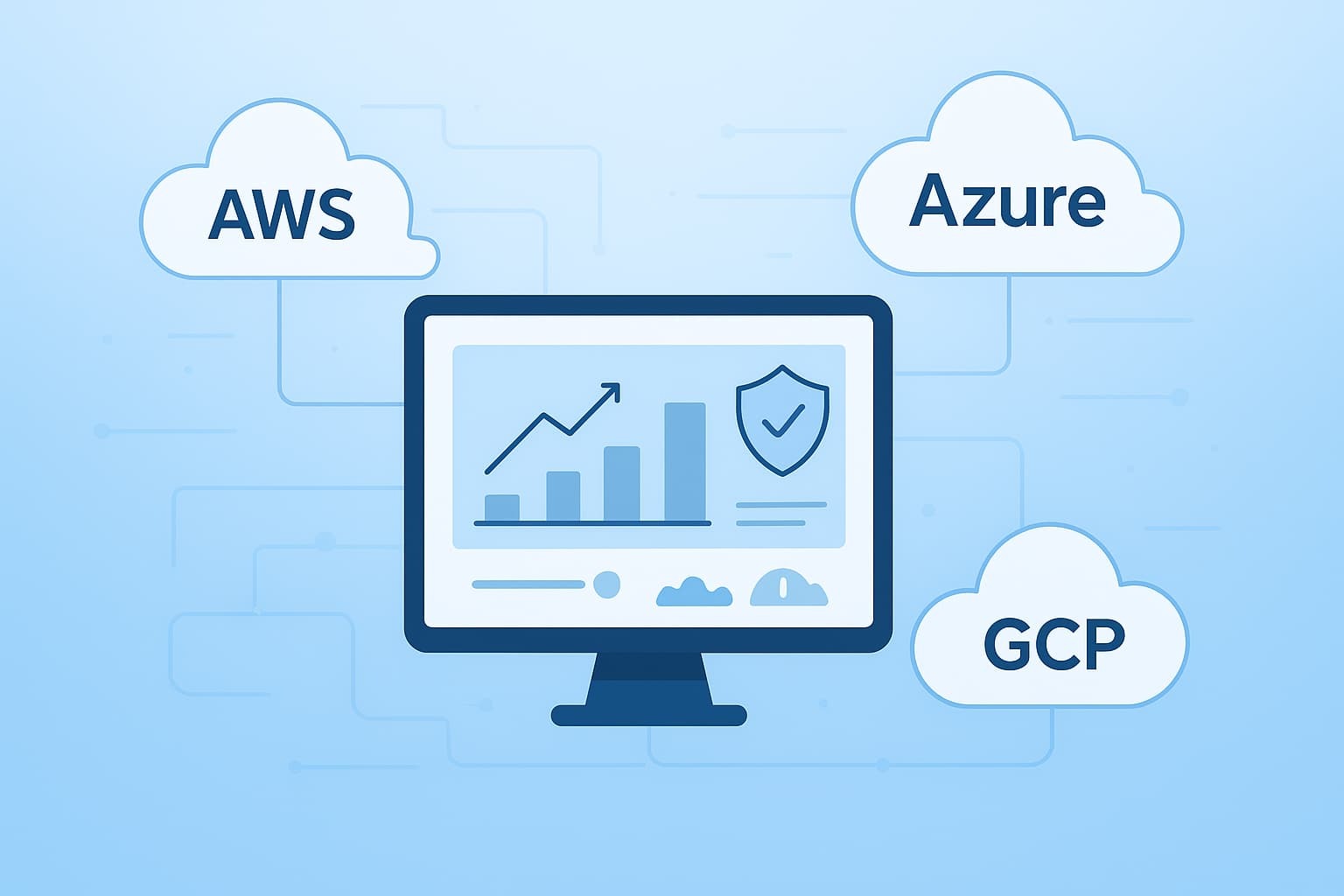
Look, protecting cloud systems across monitoring AWS, Azure, GCP security isn’t rocket science, but it’s not a walk in the park either. Each platform has its own security holes, and most folks learn this the hard way.
At MSSP Security, we’ve cleaned up enough messes to know, you can’t just set it and forget it. Sometimes it’s a forgotten password, other times it’s sneaky code that slips through. Basic stuff like double-checking who’s logging in and spotting weird behavior goes a long way.
Want the real scoop on keeping these clouds locked down? Keep reading.
Key Takeaways
- Identity and Access Management (IAM) is the Security Backbone
- Real-Time Threat Detection Varies but Is Crucial
- Compliance and Continuous Auditing Must Be Automated
IAM and Access Control: The First Line of Defense
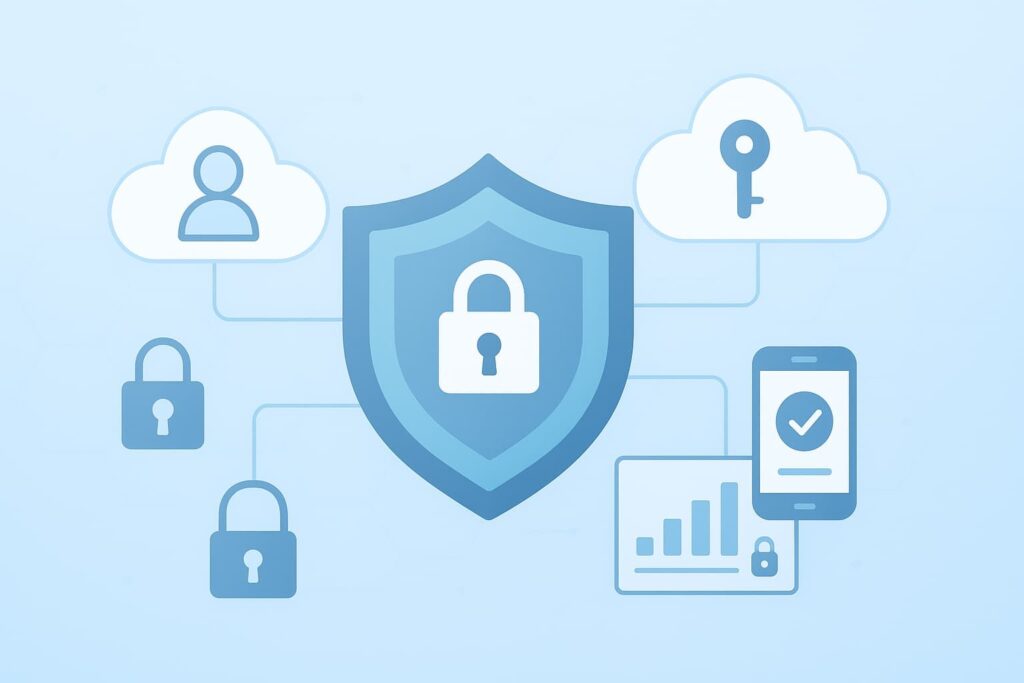
Most security breaches start with messed up access controls. We’ve seen it time and again, companies scramble to fix IAM after something breaks. AWS makes this easier with detailed policy settings that can block users based on location or time of day, plus it plays nice with other identity systems.
Strengthening these layers is part of mastering cloud security monitoring, ensuring your environment stays visible and protected across multiple clouds.
Organizations running Microsoft shops naturally drift toward Azure AD. It’s not perfect, but the built-in security checks and role controls make sense for teams already deep in the Microsoft ecosystem. Our consultants often recommend this route for clients heavily invested in Windows environments.
GCP took a different path with their security model, they built it from the ground up around Zero Trust. The way they handle permissions in layers works well, especially when teams need strict control over who touches what. At MSSP Security, we’ve helped dozens of providers lock down their client environments using these features.
The key isn’t just setting up fancy permissions, it’s matching them to real business needs. We map out exactly who needs what access, then strip away anything extra. This keeps things tight without making life harder for the people doing actual work.
Threat Detection and Monitoring: Keeping a Watchful Eye
Credit: A Cloud Guru
Nobody spots a break-in without keeping watch. Amazon’s GuardDuty has saved our clients’ bacon more than once, it catches weird behavior using some smart pattern matching and dumps everything into Security Hub. Last month, it caught a crypto miner before it could do real damage.
Microsoft bundled their security tools differently. They paired Security Center with Sentinel, and honestly, it works pretty well for log analysis. We’ve helped several MSSPs set this up for their clients, the learning curve isn’t too bad once you know where to look.
The folks at Google took their own swing at threat detection. Their Security Command Center plays nice with their other tools like Event Threat Detection and Chronicle. Sure, they talk up the AI angle, but what matters is how it helps track down problems fast.
These tools work best when they’re talking to each other. Our team usually hooks everything into one main dashboard, it beats jumping between screens when minutes count.
Setting up automatic alerts and response plans cuts down the time bad actors have to mess around in systems. Some of our MSSP partners cut their response time from hours to minutes this way.
Cloud Security Posture Management (CSPM): Auditing and Compliance on the Fly
Ensuring your cloud Monitoring AWS Azure GCP Security configurations remain secure and compliant requires continuous posture management. AWS Config Monitor checks resource configurations against compliance policies.
Azure’s Security Center offers posture management dashboards with real-time recommendations. GCP provides Cloud Asset Inventory and Policy Controller to enforce governance and assess risk.
Automated posture checks help teams maintain alignment with frameworks while reducing manual work, a key advantage of outsourced cloud security posture management.
The key is automation, manual audits don’t scale in dynamic cloud environments. We help clients set up automated compliance checks that feed into their governance workflows, enabling them to remediate misconfigurations before they become vulnerabilities. [1]
Data Security and Encryption: Protecting What Matters Most
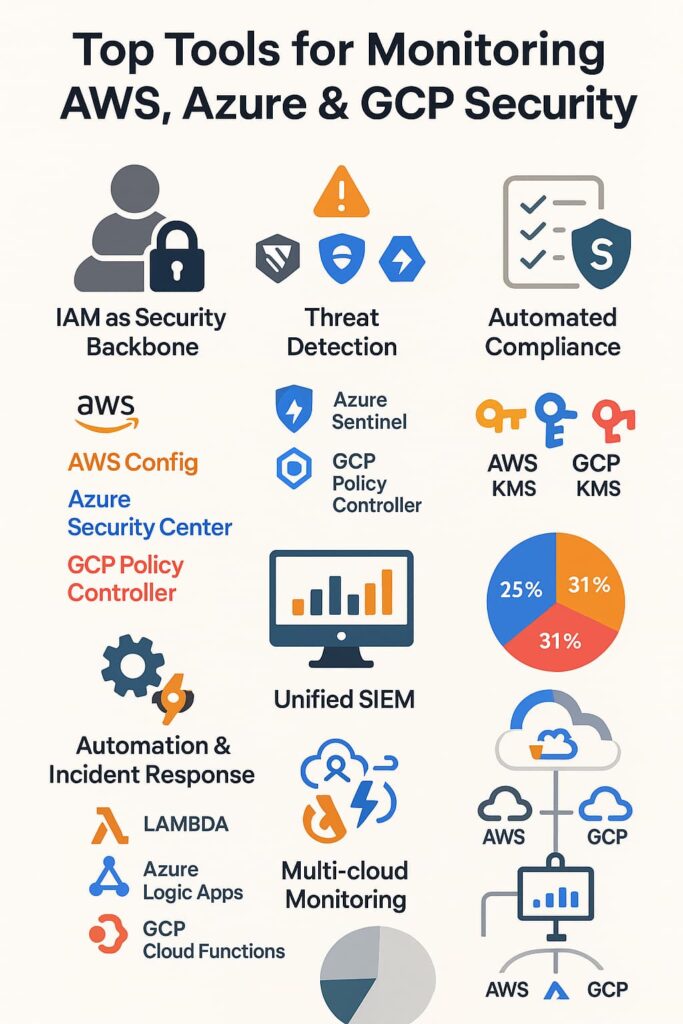
Encryption at rest and in transit is standard, but the controls around key management vary. AWS offers KMS for granular key control and detailed audit logs. Azure defaults to encryption with Azure Key Vault integration, supporting network-level encryption via Private Link and ExpressRoute. GCP encrypts data at rest by default and provides Cloud KMS for customer-managed keys.
From our viewpoint, customer-managed keys paired with automated rotation and strict audit trails are vital controls that elevate your security posture beyond the basics.
Continuous Compliance and Auditing: Never Miss a Beat
CloudTrail and AWS Config together form a strong compliance backbone on AWS, with AWS Artifact providing audit-ready reports. Azure’s Policy and Compliance Manager track resource compliance, while GCP’s Cloud Audit Logs and Security Command Center report on adherence to standards.
We advocate integrating these compliance data streams into a central monitoring solution, allowing teams to spot deviations quickly and maintain continuous audit readiness without extra overhead.
SIEM and Security Orchestration: The Glue That Holds It Together
No single cloud platform’s native tools cover all bases. We often recommend augmenting them with vendor-agnostic SIEM solutions that ingest logs and alerts from all clouds. This unified view is a game-changer for security teams managing hybrid or multi-cloud environments.
Security orchestration workflows that trigger automated remediation, like AWS Lambda, Azure Logic Apps, or GCP Cloud Functions, help close the loop, reducing manual intervention and accelerating response times.
Multi-Cloud and Hybrid Monitoring: Embracing Complexity with Simplicity
Organizations rarely operate in a single cloud. We see clients adopting multi-cloud and hybrid strategies, which come with visibility challenges. Using cloud-native tools alongside third-party platforms like MSSP Security enables centralized policy enforcement, anomaly detection, and compliance across AWS, Azure, and GCP.
Building these capabilities is closely tied to cloud workload protection platform, ensuring workloads remain secure even as environments evolve.
Our experience shows that layering cloud-native capabilities with MSSP Security’s expertise in continuous monitoring and incident response offers the best of both worlds: deep platform integration plus vendor-neutral oversight.
Automation and Incident Response: Speed Saves the Day
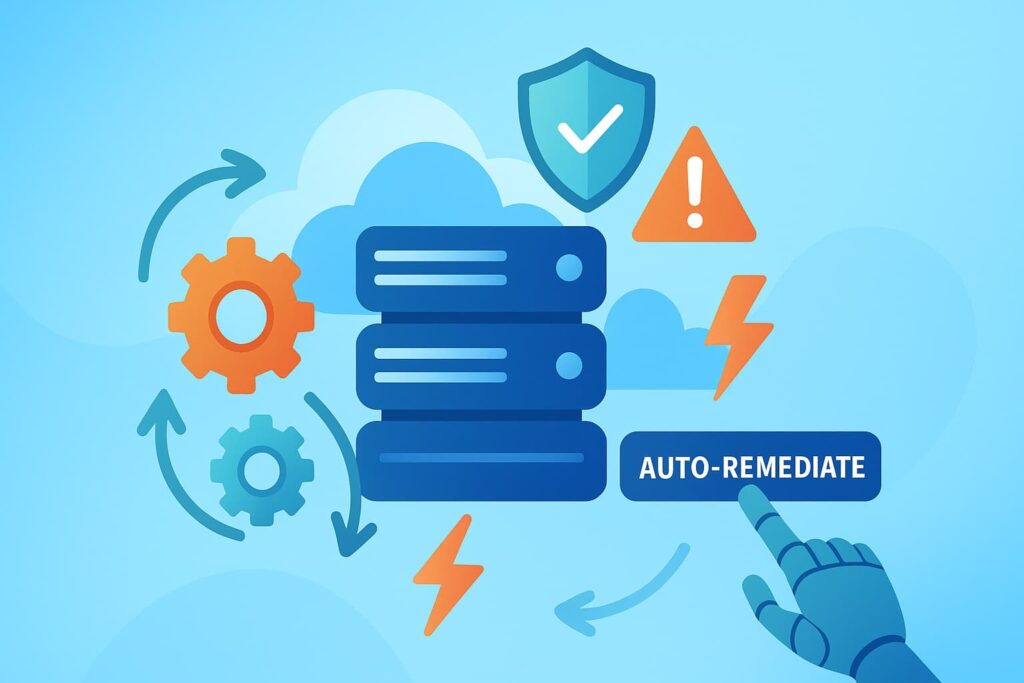
Manual processes can’t keep pace with today’s threats. Automation is no longer optional, it’s essential. AWS’s EventBridge, Azure Logic Apps, and GCP’s Eventarc are powerful for automating alerts and remediation scripts.
We’ve built automated incident response playbooks that integrate with these services, enabling rapid containment and mitigation without waiting for human action.
Which Cloud to Choose for Your Monitoring Needs?
- AWS: Ideal if your team needs fine-grained control and flexibility, with mature IAM and monitoring tools.
- Azure: Best for organizations deeply embedded in the Microsoft ecosystem leveraging hybrid cloud.
- GCP: Suited for data-driven teams seeking modern, AI-powered security with a focus on Zero Trust.
No matter your choice, combining native tools with MSSP Security’s continuous monitoring and expertise can reduce risk and free your team to focus on strategic initiatives. [2]
FAQ
1. What’s the best way to start monitoring AWS, Azure, and GCP security?
Start with native tools like CloudTrail, Azure Security Center, and Google Security Command Center. These help track activity, detect anomalies, and manage audit logging. Pair them with SIEM and cloud-native security tools for unified threat detection. A mix of automation, IAM controls, and real-time monitoring builds a strong multi-cloud security posture.
2. How does identity and access management improve cloud security?
Identity and access management (IAM) helps define who can access what across AWS, Azure, and GCP. Combining role-based access control (RBAC) and multi-factor authentication (MFA) limits risks.
When integrated with cloud identity management, IAM ensures access control, supports compliance auditing, and strengthens defenses against insider threats and misconfigurations in hybrid and multi-cloud environments.
3. Why is vulnerability scanning and threat detection vital in multi-cloud setups?
Vulnerability scanning identifies weak spots before attackers do. Threat detection tools like Amazon GuardDuty or Azure Defender catch suspicious behavior early. Pairing intrusion detection with security automation and event logging ensures faster response.
In multi-cloud security, continuous scanning and cloud forensic analysis reduce risks while supporting compliance with cloud security frameworks.
4. How can cloud compliance and audit logging simplify security management?
Cloud compliance depends on detailed audit logging and policy enforcement. Services like CloudTrail and Azure Monitor provide audit trail analysis for every change. Security analytics and cloud configuration monitoring help detect violations.
Combining cloud governance with compliance auditing tools creates transparency and accountability across AWS, Azure, and GCP environments.
Conclusion
Monitoring AWS, Azure, and GCP security demands a unified strategy that combines native cloud tools with centralized visibility, automation, and expert oversight. From IAM and threat detection to compliance, every layer of protection strengthens your overall cloud security posture.
Partner with our experts to simplify multi-cloud security management. With 15+ years of experience and 48K+ successful projects, we help MSSPs streamline operations, reduce tool sprawl, and enhance service quality, building a cloud defense that’s efficient, scalable, and future-ready.
References
- https://en.wikipedia.org/wiki/Amazon_Web_Services
- https://aws.amazon.com/id/blogs/mt/monitor-hybrid-and-multicloud-environment-using-aws-systems-manager-and-amazon-cloudwatch/