


Digital thugs aren’t stupid – they’ve got playbooks for every industry out there. When hackers go after a hospital’s patient records, it’s nothing like their attempts to drain bank accounts or steal credit card numbers.
That’s why security teams need threat feeds that match their turf. No point in a bank getting spammed about hospital breaches, right? Smart teams plug into feeds that spot the exact tricks being used against their industry.
Sound useful? Stick around – there’s more you should know about protecting your corner of the business world.
Key Takeaways
- Industry specific threat feeds deliver focused, relevant data that helps security teams prioritize and respond faster.
- They combine tactical, operational, and strategic intelligence tailored to sector-specific risks and attacker behaviors.
- Selecting the right feed involves weighing data quality, update frequency, integration capabilities, and industry relevance.
The Growing Need for Tailored Threat Intelligence
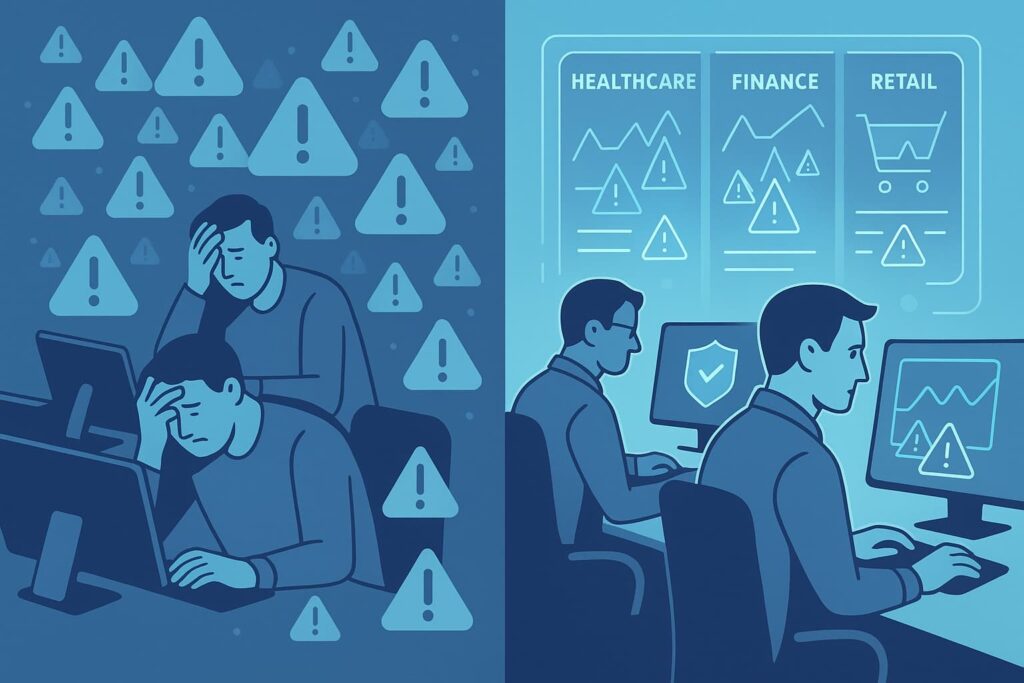
Cybercrime bills keep stacking up – organizations worldwide are bleeding money trying to patch security holes. Our security audits show that basic defenses just don’t cut it anymore. Each sector’s getting hit with custom-built attacks that slip right past generic security.
Take healthcare – hackers go straight for life-support systems and patient monitors, knowing exactly where it hurts most. Banks face a different beast entirely: sophisticated fraud rings working with insiders to crack multi-million dollar heists.
We’ve spent years watching clients throw money at broad security solutions that leave blind spots big enough to drive a truck through. That’s why our team pushes for sector-specific intel.
When you know exactly what tricks are being used in your industry, you can stop wasting resources on irrelevant threats and focus on what matters. Security teams need this precision – it’s the difference between throwing punches in the dark and landing targeted hits.
What Are Industry-Specific Threat Intelligence Feeds?
Picture specialized threat feeds as your industry’s early warning system. These aren’t just random alerts – they’re filtered intelligence streams that know your sector’s weak spots. Our team has seen how these feeds catch the exact tricks hackers use against specific industries.
The real value isn’t in the raw data – it’s the story behind each threat. These feeds connect the dots between who’s attacking, why they’re doing it, and how they operate.
Much like a specialized threat intelligence service, they help decode complex attack patterns and transform scattered data into clear, actionable insights.
When we audit energy sector feeds, we see detailed warnings about hackers targeting power grid controls. For retail clients, the feeds zero in on credit card skimmers and fake checkout pages.
Having helped dozens of MSSPs pick the right feeds, we’ve learned that context matters more than volume. Anyone can blast out alerts – but knowing which threats actually matter to your clients? That’s where specialized feeds earn their keep..
Why Industry-Specific Threat Feeds Matter
Credit: Invensis Learning
- Relevance: They focus on threats that directly impact your industry, cutting down false positives and alert fatigue.
- Contextual Awareness: Gain insights into attacker tactics and evolving trends that shape your sector’s threat environment.
- Regulatory Compliance: They support adherence to industry standards by highlighting risks relevant to specific compliance requirements.
- Proactive Defense: Enable early detection and mitigation of sector-targeted campaigns before they escalate.
- Collaboration: Facilitate sharing intelligence within industry groups, strengthening collective cybersecurity posture.
From our vantage point, what makes these feeds indispensable is their ability to tailor intelligence in a way that aligns with real-world risks and operational realities unique to each sector.
This is the essence of actionable threat intelligence, turning raw indicators into sector-focused insights that security teams can immediately apply to strengthen defenses.
Types of Threat Intelligence in Industry Feeds
Tactical Intelligence:
Includes immediate actionable data such as IP addresses, malicious domains, malware hashes, and phishing indicators. This info helps in quick detection and blocking of known threats.
Operational Intelligence:
Provides deeper insights into attacker tactics, techniques, and procedures (TTPs) relevant to the sector. This intelligence supports incident response and custom detection rule creation by illustrating attacker behavior patterns.
Strategic Intelligence:
Offers a high-level view of broader trends, geopolitical risks, and long-term threat forecasts affecting your industry. Decision-makers use this to align cybersecurity investments and policies with evolving threats. [1]
Sources of Industry-Specific Threat Feeds
Threat feeds come from multiple streams, each bringing unique value:
- Commercial Providers: Offer enriched data with rapid updates and human-curated analysis, often bundled with dedicated support.
- Open-Source Intelligence (OSINT): Community-driven, publicly available data like malware hashes and suspicious URLs. Cost-effective but requires filtering to avoid noise.
- Information Sharing and Analysis Centers (ISACs): Non-profit industry groups that facilitate secure, sector-specific intelligence sharing.
- Government Agencies: Provide intelligence focused on national security and critical infrastructure but often require special clearances.
- Internal and Community-Shared Intelligence: Your own logs and data combined with trusted partners’ insights create a rich, localized picture of threats.
We’ve found blending these sources yields the most comprehensive and timely intelligence.
How to Evaluate and Select Industry-Specific Threat Feeds
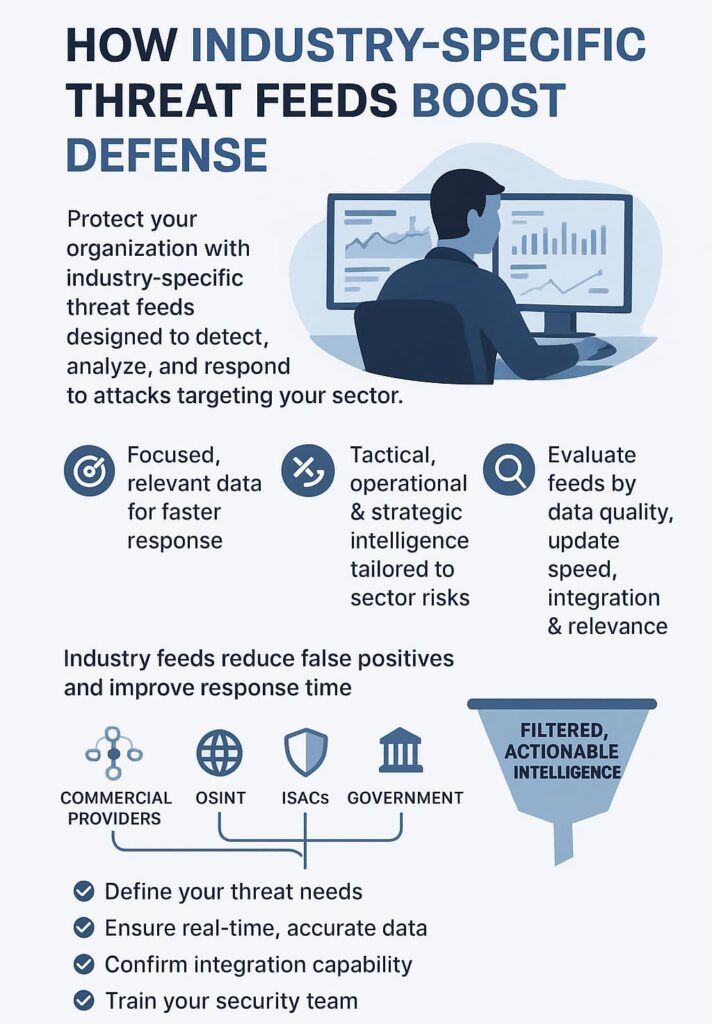
Define Your Needs:
Start by understanding your industry’s threat landscape and your organization’s security goals. Decide which intelligence types you require, tactical, operational, strategic, or all three.
Key Evaluation Criteria:
- Data Quality and Accuracy: Feeds should have strict accuracy standards, low false positives, and sound attribution.
- Timeliness: Look for near real-time updates to respond quickly to emerging threats, plus historical data for investigations.
- Integration: Seamless compatibility with your SIEM, firewalls, and other tools is critical. APIs and good documentation matter.
- Relevance: The feed must focus on threats impacting your sector specifically.
- Cost-Effectiveness: Weigh subscription fees against the ROI from faster detection and reduced incident impact.
Avoid the common pitfall of grabbing generic feeds just because they’re popular. Relevance and integration matter far more.
Common Mistakes to Avoid
Most MSSPs jump straight for the big-name feeds, drowning their analysts in useless alerts. We’ve watched teams burn out sorting through warnings that don’t match their clients’ industries.
Here’s a painful lesson from our audits: fancy feeds mean nothing if your security stack can’t digest them. Last month, a client spent big on premium feeds their SIEM couldn’t even read – pure money down the drain.
Training’s another trap. Security teams often think they’ll just plug in a feed and magic happens. But we’ve seen how this backfires. Without proper prep time and hands-on practice, those expensive feeds just collect dust. Your analysts need solid training to turn those alerts into action. [2]
Use Cases by Industry
Financial Services:
Feeds focus on banking trojans, business email compromise, and payment system threats. Compliance with PCI DSS and SOX drives intelligence priorities.
Healthcare:
Emphasis on ransomware targeting medical devices and vulnerabilities in electronic health records. Compliance with HIPAA is key.
Manufacturing:
Threats include intellectual property theft, industrial control system intrusions, and supply chain attacks.
Retail/E-commerce:
Feeds prioritize point-of-sale malware, web skimming, and e-commerce fraud threats aiming at customer data.
Implementing Industry-Specific Threat Feeds

- Choose Relevant Sources: Pick feeds aligned with your sector and security needs.
- Use Automated Processing: Employ tools to analyze and enrich feed data, turning raw intelligence into actionable insights.Just like well-curated threat intelligence feeds, this approach filters out irrelevant noise, ensuring your team focuses only on threats that truly impact your sector.
- Regularly Review and Update: Threat landscapes evolve fast; keep your feeds and tools current.
- Train Your Security Team: Intelligence is only as good as the team using it. Invest in training for interpreting and acting on threat data.
FAQ
1. What are industry specific threat feeds and why do they matter?
Industry specific threat feeds give security teams focused data about the cyber risks that hit their exact field. They track sector-specific cyber threats, malware indicators, and ransomware threats by industry.
Instead of sorting through random alerts, teams see real-time threat updates that match their environment, improving detection and response where it truly counts.
2. How do industry threat intelligence feeds work?
Industry threat intelligence feeds pull information from many trusted sources, like ISAC threat feeds, dark web threat data, and open source intelligence feeds. They analyze sector-specific threat actors and attack vectors to find patterns.
This mix of tactical threat intelligence, operational threat intelligence, and strategic threat intelligence helps organizations understand who’s targeting them and why.
3. What are the main benefits of using industry specific threat feeds?
These feeds help reduce noise by focusing only on relevant industry IOCs and vulnerability intelligence. They also improve SOC alert prioritization through smarter threat correlation.
Security teams can predict targeted attack campaigns, improve compliance-driven threat intelligence, and respond faster to advanced persistent threats (APT) within their sector’s unique cyber threat landscape.
4. Which industries benefit most from sector-specific threat feeds?
Financial services, healthcare, retail, energy, and government agencies all rely on these feeds. A financial sector threat feed spots fraud and phishing attack trends.
A healthcare feed detects ransomware threats by industry, while energy sector vulnerabilities focus on industrial control systems threats and supply chain cyber threats that could impact critical infrastructure threat intelligence.
Conclusion
Industry-specific threat feeds are no longer optional, they’re essential. They tailor intelligence to sector-specific risks, helping organizations move beyond generic defenses toward proactive security. With relevant, contextual, and actionable insights, these feeds reduce response times, minimize false positives, and protect critical assets more effectively.
If your organization is serious about cybersecurity resilience, it’s time to act. Get expert consulting tailored for MSSPs to streamline operations, cut tool sprawl, and boost service quality. With 15+ years of experience and 48K+ projects completed, our team helps you choose the right tools, improve integration, and align your tech stack with business goals.
References
- https://en.wikipedia.org/wiki/Threat_Intelligence_Platform
- https://www.eccouncil.org/cybersecurity-exchange/threat-intelligence/popular-cyber-threat-intelligence-feeds/